Cyber-Physical Systems: Issues, Design and Opportunities
Distinguished Professor Peng Shi, FATSE, FEAJ, MAE, IEEE, FIET, FIE, FIETI
Electrical and Electronic Engineering
School of Electrical and Mechanical Engineering
College of Engineering and Information Technology
Adelaide University
Adelaide SA 5005, Australia
Email: peng.shi@adelaide.edu.au
Abstract: Cyber-physical systems (CPS), including smart grids and intelligent
transportation systems, are complex systems in which tightly integrated software
and hardware components work together to accomplish well-defined tasks. While
such integration enables high performance and efficiency, it also significantly
increases system vulnerability by creating more opportunities for cyber-attacks,
which may lead to serious economic, societal, and human consequences.
Consequently, cybersecurity has emerged as a critical challenge in the design and
operation of CPS.
This talk examines CPS security from an attacker’s perspective. It begins with an
overview of CPS fundamentals, key security issues, and representative research
on cyber-attacks. The talk then presents our recent work on the design of stealthy
hybrid attacks on CPS, demonstrating how coordinated cyber-attacks can be
executed to maximize system performance degradation while reducing the
likelihood of detection. By exposing these attack mechanisms, the work
underscores the need for more effective, efficient, and resilient defense strategies
capable of detecting intrusions and ensuring that CPS operate in a secure, reliable,
and desired manner.
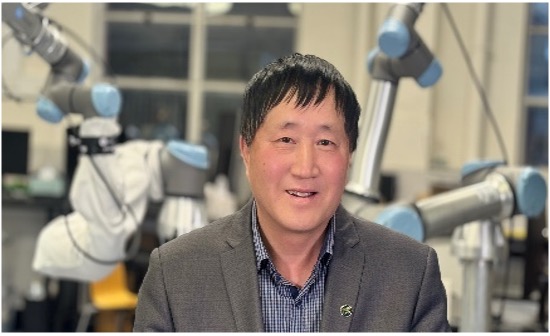 Peng Shi is a Distinguished Professor, Leader in Systems and Control, and Director of both
the Laboratory of Advanced Unmanned Systems and the Laboratory of Cyber-Physics-Human
Systems at Adelaide University, Australia.
Peng Shi is a Distinguished Professor, Leader in Systems and Control, and Director of both
the Laboratory of Advanced Unmanned Systems and the Laboratory of Cyber-Physics-Human
Systems at Adelaide University, Australia.
His research interests span systems and control theory, with applications to autonomous and
robotic systems, intelligent systems, network systems, and cyber-physical systems. His work
has been globally recognized with numerous prestigious distinctions. These include the IEEE
Lotfi Zadeh Award for Emerging Technologies (2027); the IEEE Lotfi Zadeh Pioneer Award and
IEEE Norbert Wiener Award (SMCS, 2025 and 2024); the Annual Scientific Award and the Ramesh
Agarwal Lifetime Achievement Award from the International Engineering and Technology
Institute (IETI, 2024 and 2023); and the M. A. Sargent Medal (Engineers Australia, 2022).
Additionally, he has been named a Highly Cited Researcher in both engineering and computer
science (Web of Science, 2014–2025) and recognized as the Most Cited Researcher in
Electrical and Electronic Engineering (Times Higher Education, 2018). He has also earned a
place on the Lifetime Achiever Leaderboard and as a Field Leader (The Australian Research
Review, 2019–2024). His institutional accolades include the Stephen Cole the Elder Award for
Excellence in Research Supervision and the Outstanding Research Achievement Award from the
University of Adelaide (2025 and 2020), as well as the Chancellor’s Gold Medal for
Outstanding Research Performance from Victoria University (2018).
Professor Shi's extensive professional service includes roles as a member of the Fellow
Evaluation Committee, Nomination Committee, Award Committee, Board of Governors, Vice
President, and Distinguished Lecturer for the IEEE SMC Society, and International
Conferences. He is a Fellow of the Australian Academy of Technological Sciences and
Engineering, and an International Fellow of the Engineering Academy of Japan, the Academy of
Europe, the European Academy of Sciences and Arts, and the Academy of Romanian Scientists.
He is also a Fellow of the IEEE, IET, IEAust, CAA and IETI. Currently, he serves as the
Editor-in-Chief of IEEE Transactions on Cybernetics, a Senior Editor of IEEE Access, and an
Associate Editor for Automatica and IEEE Transactions on Artificial Intelligence.