Perception Generalization and Intelligent Collaboration in Complex Environments
School of Artificial Intelligence
Shenzhen University
Abstract: This report explores the paradigms of perception generalization and intelligent collaboration within complex environments, focusing on three core dimensions. First, cross-modal and cross-domain perception aims to achieve multi-source information fusion and seamless cross-scenario generalization. Second, heterogeneous system collaborative decision-making investigates mechanisms to foster efficient, complementary collective intelligence among diverse entities, including humans, machines, and physical objects. Third, collaborative security planning centers on constructing explainable, trustworthy, and robust frameworks to safeguard the collaborative process. Ultimately, this report offers critical insights for engineering a new generation of intelligent systems characterized by high adaptability, collaborative efficiency, and robust reliability.
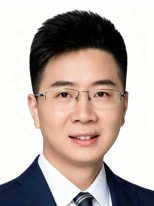 Dr. Chengwen Luo is a Distinguished Professor at the School of Artificial Intelligence, Shenzhen University. He concurrently serves as the Vice Dean of the Research Institute of Science and Technology Development, Assistant Dean of the School of Artificial Intelligence, and Director of the Industrial Big Data Research Center at the National Engineering Laboratory for Big Data System Computing Technology. He received his Ph.D. from the National University of Singapore and completed his postdoctoral research fellowship at the University of New South Wales. His primary research interests encompass multi-modal intelligent perception and human-machine collaboration. As a principal investigator, he has led numerous high-profile research initiatives, including the National Natural Science Foundation of China (NSFC) Excellent Young Scientists Fund, the NSFC Key Project of Regional Joint Funds, the National Key R&D Program of China, as well as NSFC General and Young Scientists Programs. In addition to his research, he serves on the editorial boards of prestigious international academic journals, including ACM Computing Surveys. His academic contributions have been recognized with several distinguished awards, including the First Prize of the Science and Technology Progress Award from the Chinese Association of Automation (CAA), the First Prize of the Wu Wenjun Artificial Intelligence Science and Technology Progress Award, the First Prize of the Natural Science Award from the Guangdong Artificial Intelligence Industry Association, and the ACM SIGMOBILE China Rising Star Award, etc.