The Field of Super-Minimally Invasive Surgery: A Key Development Direction for Artificial Intelligence and Surgical Robots
Department of Gastroenterology
The First Medical Center of Chinese PLA General Hospital
Abstract:
Super-minimally invasive surgery (SMIS) represents a cutting-edge field driving the
innovation and upgrading of contemporary surgery. It establishes diagnostic and therapeutic
channels based on a novel surgical approach system, including natural body cavities, natural
multi-compartment pathways, tunnel access, and puncture micro-access. By creating natural or
artificial minimally invasive operating spaces within the body, these access routes reach
target lesions with minimal tissue damage, abandoning the modes of traditional open incision
and extensive dissection, and maximally preserving the anatomical integrity and
physiological functions of organs.
With the core principles of organ preservation and radical lesion eradication, SMIS has
achieved a broad expansion of diagnostic and therapeutic indications. It not only covers the
radical treatment of early-stage tumors, but also extends to precise lesion resection of
advanced tumors after multidisciplinary team (MDT) evaluation, precise resection of various
benign tumors, and corrective treatment of functional diseases. Meanwhile, it enables safe
diagnostic and therapeutic operations within the biliary and pancreatic duct system,
realizing protective surgery that preserves the function of the papillary sphincter, which
greatly improves the safety of minimally invasive treatment for complex hepatobiliary and
pancreatic diseases.
Artificial intelligence (AI) and surgical robots serve as the core support for the
implementation and popularization of SMIS technology. Preoperatively, AI can perform
high-definition imaging screening, precise localization and classification of lesions, and
intelligently plan individualized minimally invasive surgical paths. Intraoperatively,
relying on the ultra-precise manipulation capability of robots and the AI intelligent
recognition system, important structures such as blood vessels and nerves can be accurately
identified and avoided, achieving meticulous dissection of lesions and precise sealing and
repair of wound surfaces, thus reducing the risks of intraoperative injury and bleeding.
Postoperatively, AI enables full-cycle precise management and early prediction of the
occurrence of various complications. The in-depth integration of artificial intelligence and
surgical robots breaks through the shortcomings of traditional minimally invasive
operations, including limited visual field, tactile deviation, and weak postoperative
controllability, and represents the core direction for the future development of
super-minimally invasive surgery toward precision, function preservation, and
intellectualization.
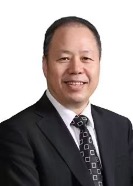 Enqiang Linghu is a Professor, Chief Physician and Doctoral Supervisor. He currently serves
as Director of the Department of Gastroenterology at the First Medical Center of Chinese PLA
General Hospital, Director of Beijing Key Laboratory of Digital Diagnosis and Treatment
Research and Development for Super-Minimally Invasive Surgery, Chairman of the
Gastroenterology Physicians Branch of Chinese Medical Doctor Association, Former Chairman of
the Digestive Endoscopy Branch of Chinese Medical Association, and Chairman of the
Gastroenterology Expert Committee of the National Health Commission for Capacity Building
and Continuing Education. He is the recipient of the Wu Jieping Medical Innovation Award in
2019, and was honored as one of China's Top 10 Medical Experts with Outstanding
Contributions in 2023. As the Chief Scientist of the National Key Research and Development
Program for both the 13th and 14th Five-Year Plan periods, he has won the ACG International
Award from the American College of Gastroenterology three times, along with the Second Prize
of the National Science and Technology Progress Award, the First Prize of the Military
Science and Technology Progress Award, and the First Prize of the Beijing Science and
Technology Progress Award, among other academic honors. He has published English monographs
including 《Therapeutics of Digestive Endoscopic Tunnel Technique》 and 《Super Minimally
Invasive Surgery: Gastrointestinal Endoscopy Section》.
Enqiang Linghu is a Professor, Chief Physician and Doctoral Supervisor. He currently serves
as Director of the Department of Gastroenterology at the First Medical Center of Chinese PLA
General Hospital, Director of Beijing Key Laboratory of Digital Diagnosis and Treatment
Research and Development for Super-Minimally Invasive Surgery, Chairman of the
Gastroenterology Physicians Branch of Chinese Medical Doctor Association, Former Chairman of
the Digestive Endoscopy Branch of Chinese Medical Association, and Chairman of the
Gastroenterology Expert Committee of the National Health Commission for Capacity Building
and Continuing Education. He is the recipient of the Wu Jieping Medical Innovation Award in
2019, and was honored as one of China's Top 10 Medical Experts with Outstanding
Contributions in 2023. As the Chief Scientist of the National Key Research and Development
Program for both the 13th and 14th Five-Year Plan periods, he has won the ACG International
Award from the American College of Gastroenterology three times, along with the Second Prize
of the National Science and Technology Progress Award, the First Prize of the Military
Science and Technology Progress Award, and the First Prize of the Beijing Science and
Technology Progress Award, among other academic honors. He has published English monographs
including 《Therapeutics of Digestive Endoscopic Tunnel Technique》 and 《Super Minimally
Invasive Surgery: Gastrointestinal Endoscopy Section》.